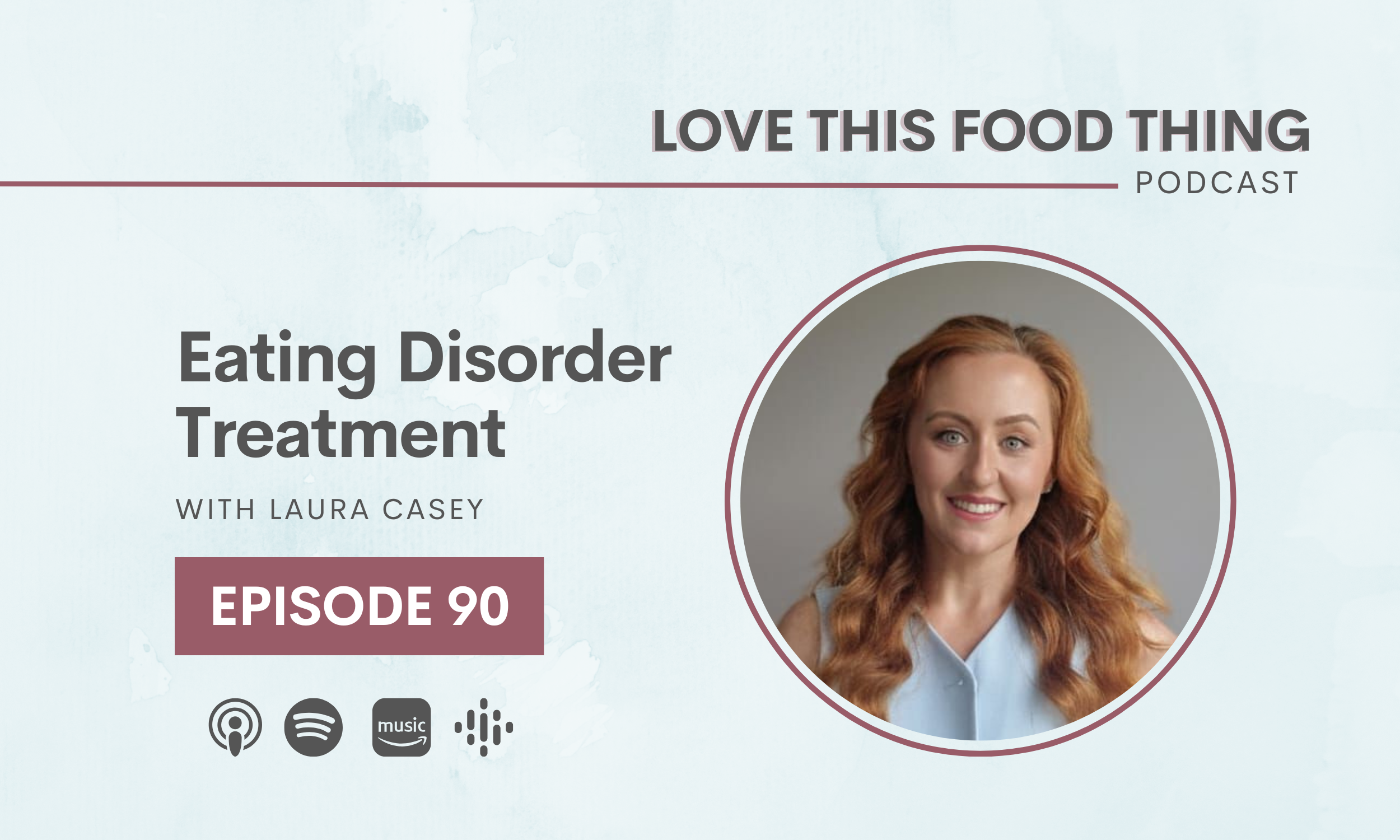
Laura Casey is the Director of Services at the Lois Treatment Centre for Eating Disorders in Dublin.
Laura says: “For the person to realise WHY… always helps their recovery because although they can’t change what happened, they can know why this happened. And then what their triggers are, which gets them to a point where they’re more resilient because they’ve done the work.”
Laura is passionate about a multi pronged approach for eating disorder recovery.
In this episode, we talk about the healthcare system, accessing treatment and how the lack of resources impedes a successful recovery.
And so much more!
I loved my chat with Laura. She's a ray of sunshine.
EPISODE TIMESTAMPS:
[01:21] - Laura's Personal Relationship with Food
[02:14] - Raising the Next Generation
[06:31] - The Importance of Enjoying Food
[08:08] - Laura's Career in Mental Health
[09:31] - Understanding Eating Disorders and Trauma
[20:12] - Challenges in the Healthcare System
[28:43] - Challenges with Medication and Eating Disorders
[31:55] - The Complexity of Eating Disorders
[35:39] - Wellness Recovery Action Plan
[38:12] - Support and Self-Compassion Strategies
CONNECT WITH LAURA CASEY:
THANK YOU FOR LISTENING!
If you enjoyed this episode, please let us know your thoughts on Instagram @lovethisfoodthing and consider leaving an honest review and rating for the show - we’d be extremely grateful.
WAYS WE CAN HELP YOU:
EPISODE #90 TRANSCRIPT: Eating Disorder Treatment with Laura Casey
Jemma: Welcome to Love This Food Thing podcast. I'm Jemma. This is the place where we explore our relationship with food, be it friend or foe, and how this affects our behavior. Here's today's episode. Welcome back to Love This Food Thing podcast. I'm delighted to be joined today by Laura Casey. Laura is the director of services at the low lowest bridge Eating Disorder treatment center in Dublin.
She has many years of experience in the mental health field. Laura is dedicated to supporting recovery. Lots of people who come on who are experts are dedicated to supporting recovery, but it, it takes some, it really takes something to kind of keep going in this, let's say, community. So she supports her recovery through compassionate, structured, and person-centered care.
By helping individuals rebuild their lives with confidence and resilience. Laura, welcome to Love This Food Thing podcast, Jemma, thank you so much for having me on. It's an absolute pleasure. I had no intention of saying that little bit in the middle there. I just went off, I went off piece
Laura: and almost,
Jemma: almost couldn't bring myself back.
Laura: You encapsulated why I'm in it. Very, very, uh, very well. So thank you for that.
Jemma: Okay, that's my pleasure. Now, Laura's actually at work at the moment, so we're gonna go straight in. How would you describe your relationship with Food, Laura, as a friend or a foe?
Laura: So I think like, like everybody, I think Jemma, you know, it, it depends on your life stage, you know?
I think, you know, and it depends what generation you were brought up in and the different kind of connotations that were around about body. Mm-hmm. Image and food when you were growing up. Yeah. And you know, I grew up in um, kind of a decade where there would've been a lot of emphasis on, you know, being thin and striving to, you know, always up your.
What was perceived as best. And, you know, I would've grown up in a family that would've, um, you know, weight Watchers was a big thing, slim and fast, you know, there was certain, yeah. And, you know, exercise was solely for the purpose of, you know, calorie burn and, and stuff like that. So, um, you know. I'm, I'm delighted now that I'm raising two girls in a different, um, you know, time where, you know, body image.
Um, you know, it's more about being compassionate nowadays with your body and, you know, looking at yourself in, you know, a holistic way or different metrics of wellness. You, you know, your emotional wellbeing, your physical wellbeing. Um. You know, your own relationship with food and kind of steering away from what was perceived as good and bad foods, the moralizing of, of foods, which I would've grown up with.
You know, there were certain, um, food groups that were, you know. Bad or you, you had to cut out if you had an upcoming event, which I think we're, thank God, we're steering away from that now, and we're trying to go back to kind of people learning what is going to give them the best nutrition. Um, you know, what's gonna help with fatigue, what's gonna help with, you know, mood imbalances and, you know, and hearing those bridges.
Go ahead Emma. You're gonna ask me something? I think I am gonna
Jemma: ask you something because what you are saying is so. Pertinent and relevant, but I want to know how you. We're affected by the environment that you were brought up in and how that has shaped your relationship with food today. And you don't need to, we don't need to do deep dive, you know, 12 weeks of intense therapy about it.
We, yes, it's gonna be a long podcast. We just, I just want, I just want to know if it was, if it was challenging. I mean, some people don't find it challenging. People kind of assume like someone like me that everyone does, but, but they don't. I want to know if it was challenging and. You also, you, you mentioned your daughters.
Um, yeah. So, you know, you have to get your act together, don't you? Yeah. Because you don't wanna pass on anything. Absolutely. So, and just briefly tell me about
Laura: that. Yeah, so I suppose the question you're asking is really big and it's really raw and it's not mm-hmm. Something I actually would've talked about until this year actually, because I, my mother passed away this year, so I suppose.
I'm, I'm sorry. You know, I'm doing a bit of thank you for that, but I'm, I suppose I'm doing a bit of self, you know, exploration and discovery and things.
Jemma: Yeah.
Laura: Um, but like I touched on, you know, I did grow up where, um, thinness was, you know, kind of the, the number one priority in, in the women I grew up with in their lives.
And I would've had, um. Extended family members with eating disorder and they were kind of normalized. You know, they, they weren't the, the, you know, treatment wasn't sought to the level it should have been or, or would be now, and you might have people left with what we, we strive nowadays to stay away from chronic, severe enduring eating disorders, but I would've seen family, you know, live with an eating disorder, not recover from, or, or try or even, you know.
Okay. So there's a shared
Jemma: set of values that you all. Swam around in. Mm-hmm.
Laura: Exactly. And yeah, it was tremendously hard. I, I know in my teenage years, um, when my, you know, normal puberty, weight gain, et cetera, the them times in my life would've been hard and it would've, I wouldn't have had anyone to go and talk to because I suppose it was just, you get on with it and you strive to be your best self.
And, you know, there would've been periods in my life where my relationship with food was challenging and. You know, is that,
Jemma: is, is that not, not so anymore? If you would describe it now. Not so would you say it's okay.
Laura: Okay. Thank God. Yeah. I think Jemma, as the years have gone on, you know, and especially like you said, I have two daughters and um.
You know, I am very conscious that food is there to, you know, support you, to support, you know, your learning. So, you know, when we are at the table and if kids are refuse very normal things, you know, refusing, you know, vegetables or maybe a new sauce, what, how I phrase it is a totally different way than what I would've grown up with.
So I say, you know, okay, in order for you to. Kind of flourishing gymnastics class, your muscles need protein. Right. You know, so I really break down to the science of why food. And, and I suppose, you know, that's what I hope this generation eventually do is it's that they go back to what's fundamentally and scientifically and research proven stuff.
Um, also
Jemma: there's a thing I, I'm, I'm with you, but also I think we, what we have done. Is that we are missing on the enjoyment of food, the sensuality around food, the celebration of food. And I think because we have so much food, look, I know there are food banks. I know there are lots of people who can't put food on the table.
Yeah. But that's not the norm in the Western world. And I think we have so much quote unquote food that um, yeah. Yeah. Yeah. Kind of almost dunno what to do with it. Do we? Yeah.
Laura: I suppose you're touching on another thing that I do do is, is try and celebrate and enjoy food. Okay. And love, I love it all. Oh my God.
There's very little things I won't eat. Um, an Irish stew is probably the only thing I don't like, but like when we, um, out and about, you know, I love. Food. I love Pakistani food and I'd be adventurous. And I try and encourage my children to celebrate other cultures and, you know, spices and herbs that wouldn't necessarily be in our house.
'cause I'm not a fabulous cook. Right. And I try and say that, you know, these are not only taste nice, but they also do different things for your body. And I try and make it fun. And what I do is, you know, I might have Gemini, Gemini, ai, or choppy and I'd say, you know. You know, uh, cinnamon, what, what does cinnamon do for our bodies?
What is it good for? Or grapefruit juice, what does it do for our bodies? And try, you know, kind of the curiosity that children automatically have. Make it about what the food does for us. You know, how does it Right. The healing possibilities
Jemma: and food as medicine and that kind of vein. Yeah. So did you, did you, this fascinating and thank you for clarifying.
Did you. Have you always worked in the world of eating disorders? I mean, mental health. Anyone who listens to podcasts knows my feelings about that term, but it's a huge umbrella term. Or have you worked in a, in a wider field of quote unquote mental health and how did you, how did you end up at the lowest treatment center?
Laura: Yeah, so I am about coming up on probably 14 years working in mental health. I would've been in healthcare longer, but mental health. Ah, okay. Probably 14 years. I would have worked in acute settings, community settings, care of the elderly, so dementia type settings. Um, my biggest kind of. Placement was within an all female unit ward.
And, and that would've covered, you know, depression, anxiety, bipolar, schizophrenia, um, trauma, PTSD. Um, I did, um, work in eating disorders for. Probably two years when I was in, um, a hospital called St. Pat's. And then even when I moved on from that placement in acute setting, you meet eating disorders. Whether they're a comorbidity of something else or, you know, so I What was it?
What was, what was,
Jemma: sorry to cut you off here 'cause we've, we've got slightly connection issue. My end. What was it? What were those two years like? What did you
Yeah.
Learn what surprised you?
Laura: Trauma, right? So, so like I am a type of person, I like to know why things are happening and, and why, you know, and I, before that I thought that eating disorders were just a coping mechanism.
And, and, and they are, for a lot of people, they're, there are ways of managing our emotions, managing expectations, managing pressures, but they can also form from trauma. And trauma doesn't. You know, I have, and, and still do nurse people or, you know, help people whose eating disorders are as a result of a massive trauma, whether it be physical abuse or sexual abuse.
But there, there is so many kind of traumas that we've worked. Did not speak about years ago. So that might have been, you know, verbal abuse in your household or, you know, witnessing kind of emotionally dysregulated people all the time in your family and just not feeling safe, not feeling comfortable, that sense of trauma that kids kind of, um, keep to themselves and, you know, just kind of.
They become silent, they can be parentified and all these things eventually formed kind of, you know, the perfectionistic traits and the eating disorder. And I just, I found that really interesting and I loved finding out what caused it. And then, you know, the person realizing why and it always helped.
Recovery then was always. You know, I saying I can't change what happened, but I know why this happened and now I know what my triggers are and, and eventually getting to a point where they're more resilient because they've done the work. And um, yeah, I just found all eating disorders Interesting. 'cause, you know.
I think there's still stereotypical kind of, uh, you know, young, white female. Do you think pin? Yeah, I do. But when you say also
Jemma: Yeah, regarding, regarding trauma? Yes. To be very basic about a definition of trauma. Mm-hmm. I would say please disagree. I would say it's something that upsets the system, the natural order of things.
Laura: And I would agree, it's, it's, it's anything that makes you kind of fight or flight if you want to break it down that much. And, um, you know, and, and we all, you know, kids will see tr you know, they will see arguments and they will see adversities and, you know, but I suppose if, if a behavior in their house is a continued pattern where they feel unsafe or uncomfortable, or that they can't go to figures in their life for comfort or you know, that they're.
That they won't, that their emotions won't be contained and won't be met with open arms. Then eventually, you know, these maladaptive ways of coping will, will come about. And
Jemma: they're still manifestations of their emotional distress, aren't they?
Laura: Yes, exactly. Yeah. And albeit not fuel
Jemma: by diet culture, I think that's what you're.
If that's what you're saying.
Laura: Yes. Yeah. Right. And diet culture plays a massive, and I think, you know, there was a 10 year period there where we had, um, society was being a bit more, you know, um, bo body positive, and we were seeing more diverse bodies and body image was a bit more, um, you all size and shapes were celebrated, whereas I think we've.
Kind of gone backwards, regressed in the last 24 months where it's a little bit more, the thin is is where it is at. And you know, um, Ozempic has a, and Saxenda and um, the other one, they have their place in medicine for diabetes, but they also have their place in medicine for people who are struggling with you.
Being overweight and the physical toll, it's tick on their bodies. But there's the other side where unfortunately, you know, there are vulnerable people who obtain it and it's at their disadvantage and their detriment because it can fuel disorder eaten for sure. I think we're seeing, we're seeing, um. You know that the effects of social media, gym culture, you know, I mean the gym is a good place.
It's a good place for your head. It's exercise can be so therapeutic, but it can also start to become a punishment. It can also start to become an obsession and habitual thing. And you can wear your body to a thread. And social media says to us, you know, lean is good. Um. You know, organic food only You all, you, there's so much pressure coming so regular nowadays that I feel very, very sorry for people who are growing up in this culture.
Jemma: Yeah, I, yeah. You know, I, I think actually you misheard me. I, I just to, just to, I said albeit diet culture, because you were saying originally trauma, um, no, but that was really helpful and I'm saying yes, it's still a manifestation of emotional, um, distress or, or disease. I think that we are in a, uh, time of rampant consumerism and it's all about selling product and which is what social media's about.
It's about selling a product, whatever that product is. And we are also goal orientated and goal obsessed. And we must achieve and we must be better. And all those things that kind of, um. I'm gonna say political, energetic soup that we all swim around in. Yeah. That feeds things like diet, culture and Yeah.
Social media and how we need to look. And I think as that pressure continues, particularly between the have and the have-nots and the, and the, the poverty gap widens. So everyone is just like holding on and, and you know Yeah. Trying to get what someone else has got. And I think we don't talk about that enough in relation to eating disorders, I think.
Absolutely. You know,
Laura: so, yeah. Yeah. There's so much noise out
Jemma: there. There's so much noise and there's so many contradictory and people telling. Exactly. And there's so many people telling you how to get well, what you can do or you can do this. This is how to stop pinging. This is how to stop doing this.
And I am also a little bit part of that, but I've recently found myself. Taking a step back because, you know, it's like, what are we all, what are we all kind
Laura: of feeding? It's, it doesn't feel great. Yeah, I know what you're, yeah, but I suppose gma, what I like about your podcast or people who are striving to help people is you're trying to find evidence-based and you're trying to find, you know, what is the noise that you should be listening to?
What, what should you be tuning into and what should you be tuning out of? Yeah. And the more we talk about saying that, you know, if you find your. Not in a good head space and your body is not feeling good, and you notice your eating patterns are becoming secretive, or they're not allowing you to go to social events, then you need to link in with.
With proper professionals, whether it's a psychotherapist Yeah. Whether it's an art therapist, uh, whether it's a dietician or, you know, the likes of us in Lewis Bridges, we, we, we don't just, we don't just do residential, uh, we do outpatients, so people from all corners of Ireland can see our clinicians online.
And, you know, you, you're going to meet with someone who. Knows exactly what your body needs and
Jemma: give you I a hundred percent. Sorry, go on.
Laura: Yeah, yeah. No, no. I, I just a hundred percent agree. We get, there are so many influencers throwing out so much advice that it is so hard to know what's. Good advice.
Advice and what? Solid advice. Absolutely. Absolutely. What's good for your body, Jemma might not be what mine needs and what my body needs is not what yours needs. And it's being intuitive with our bodies. It's knowing what makes us feel good. You know, what movement do we like? Do we like the treadmill or do we like swimming or do we like, you know, gently movement.
I know friends have gotten into kind of, um. Conscious movement. Um, so dance, I think it's called five rhythms and yeah, five rhythms. Yeah. Yes. And I'd never heard of this before and it just, to me, that sits better with me for people in recovery because you are in tune with your body, you know?
Jemma: And I think when we can I just also define, I've got one more question before we come through the break.
Define body. Yeah. Let's define body as your physical, your emotional, your mental, and your spiritual body. Yes. Rather than yes, the whole package. We're not just talking about this physical suit or this physical thing that not how you look and not just being run around. No. Yeah, yeah. We're much more than, no nothing about, about BMI God so than, yeah.
Laura: Yes. We're
Jemma: way more than that.
Laura: Okay.
Jemma: I can like set you off, I know you can talk for days. So you reached out to me, um, about the podcast. Um, and I would like to know before we have a quick break. Why you wanted to come on, because I think you have a very specific message and I want you to be able to get that across
Laura: my, yeah.
My biggest thing is getting awareness out there of. Reaching out, re reaching out. I think, you know, people really, really struggle with maybe the shame and the guilt of admitting that they Yeah. Don't have a handle on what's going on for them. Yeah. And there can be fear, fear of judgment, and there can be, you know, um, a fear of the unknown.
Uncertainty. A loss of control, loss of identity, like eating disorder makes you. Very comfortable. You know what to expect, you know what to do in order for your body to lose weight or, you know, or if you are in an eating disorder where it's binge eaten, then you know that these, these moments will help you with your emotions of where you're consuming foods or purging is a release, et cetera, et cetera.
Could go on. But what I'm trying to. Do is say to people that the reaching out shows that you want to live a life where your quality of life is better and it's, it's hope, it's instilling hope in you will meet clinicians who will hear you validate you. You know, like, 'cause there are a lot of people IE meet or get referrals in from, or who I ring or WhatsApp or whatever way because I, I think.
You need to be personal with people. And so I try to reach out on a really personal level rather than emails and stuff. And a lot of times they'll say, oh, my GP won't send a referral because I'm not, I'm not sick enough. Or, okay, my BMI is and low enough, or my BMI is whatever, or, you know, I'm functioning fine.
I'm, I'm caring for an elderly. Parent or I've got childcare, you know? But what I'm saying is you need to do what's best for you for your long-term recovery and, and reaching out. You know, it, it, it can be a lot easier than you think it's going to be, you know?
Jemma: Okay. Okay. We're gonna take a quick break.
Welcome back to Love This Food Thing podcast. I'm here with Laura from the lowest bridge eating disorder treatment center in Dublin. Challenges accessing treatment is a big thing, isn't it? Yes. Would you like to say anything about that, or would you like to be a little bit more expansive and talk about the healthcare system?
Laura: Yeah, thanks Tim. Um, absolutely. So like lowest bridges is a private eating disorder treatment. So, you know, essentially you need to have health insurance or be able it be in a position to self pay, which not everybody is. And I mean, nowadays we have such a large crisis, uh, like a cost of living crisis that you know, less and less people are able to afford the, the luxury of having, uh, private health insurance Now.
You know, the HSE, so, you know, our, our system here does cover certain people, but for the cost of being here, but you have to meet a certain kind of parameter or you know, a certain level of severity to get that funding. And so. My biggest, you know, one of my biggest grows at the, at the moment is the lack of resources in, in the healthcare system for people with eating disorders.
And, you know, the government promised a lot of things, but, and I saw, you know, that they opened up a new clinic lately and there was a, you know, couldn of the ribbon and everything. And, but a client from that area reached out to me and she said, yes, I have. And. You know, uh, a medical appointment every month.
So I get to see, you know, some sort of medical, um, whether it's a senior reg or reg, I might get to see a consultant, but she said that's far and few between. She said, I might get to see the clinical nurse specialist, but she said there's no dietetic support, which is fundamental. Like here in Las Bridges, we'd be absolutely lost.
We have three phenomenal dieticians and what they implement for our service users. Is what we go on. Basically, you know, it's the fundamentals of what their body needs. It's the recommendations for vitamins, nutrients, they even, you know, look at exercise and what's applicable for people in different stages of recovery.
So the, the healthcare system is not. Providing, um, a holistic care for people with eating disorders. There's another client who came to me and said, you know, she needs work on, um, you know, her career, like occupational health, um, advice for going back to work and how she can ease herself into work. What she, you know, is going to say to colleagues about how long she was off, why she was off and.
Social work, you know, housing, like people trying to move out of kind of, you know, um, if they're live, having to live somewhere that's, um, detrimental to their eating disorder. And, and then looking for housing in the, the climate that we're in at the moment and, and the level of homelessness and getting on lists and they hate to see, aren't providing those because they don't have those resources.
You know, the, the lack of resources is, is. Paramount, I think to people not being able to access treatment. And then, you know, there's a lot of like, there are some absolutely fabulous, really well knowledge and caring gps who are invested and you know, look at the person and whether it be arfid or Orthorexia anorexia, binge eating disorder, they will refer them for what they're going through.
They'll look at their emotional wellbeing. However, if the other end of the scale then where the gps don't have the education, they don't have the resources, they've got time limitations, so they're not sending referrals because they're not seeing the full picture, that may, maybe it's a lack of time. So you see someone for five minutes, you prescribe maybe an antidepressant prescribing multivitamin and off, off they go.
And they're not, is that what they do? An antidepressant and a multi vet. That has come up a lot. Wow. That has come up a lot. Especially in kind of the Midlands region. Yeah. Wow. Of, of Ireland. And it's just really disheartening because if someone goes to their gp, they've already, you know, gone out on a limb, they've already taken a leap of faith, they've shown courage, and then suddenly to be met with maybe a dismissive attitude or a, I can't help you or I don't know what's out there for you.
That can be just really, really disheartening and it can set people into a spiral of, well, I'm not gonna reach out again, or There's no point. Or, and then you're left with someone who will end up with a chronic eating disorder and some eating disorders can be fatally, you know, like, you know. Yeah. Don't talk enough about, and.
The chemical imbalances that they cause. And we hear about Refeeding syndrome with anorexia and how, you know, um, red flags with bloods and it, and all the rest. But even with binge eating, you know, purging can cause severe abnormal abnormalities and blood results and chemical imbalances.
Jemma: I know two people who died throwing up over the toilet, and that was back in the early nineties.
Yeah, and we
Laura: still don't talk about enough, Jen, like in like I, I, I still think there's not enough awareness and you have gps who just don't have the knowledge or the time or the resources. And so
Jemma: are you linked in with certain, because you, you are a private practice, so you can't be on the frontline.
Yeah. I mean now I'm sure you would love to be. So are you linked in with a group of, uh, you know, like-minded gps and other healthcare professionals? Are you kind of all in it together? Where? In, in Dublin, in, in the area that you are in? No, not all. I don't, I don't, yeah.
Laura: No. But when you say in it together, no, not really.
Like, it's quite staggered. We, we would be fortunate enough that. Some gps that we've gotten to know over the years who are, you know, well knowledge and well versed, you know, send in referrals and they're really appropriate. And then you have dieticians who work out in the public who know about us and might send in referrals or therapists, but community mental health teams really are the ones who should be sending the most referrals.
And they're the ones we're not getting the songs. And why don't, why
Jemma: don't you get
Laura: them?
Jemma: Why is, is that relationship not
Laura: happening? Yeah. So I wondered that and, and lately I had a conversation with quite, uh, prominent figures in the area, and it was, well, look, we need to keep it where it's at, funding, et cetera.
It, I think there's a monetary pressure on that. It's all funding, isn't it? Mm-hmm. Yes. To keep people in. The local services and just try and get them resources. But you know, if, if someone is reaching out for help, that's when you need to help them. You, you can't wait. You can't put people on a timeframe and say, well, look, I'll try get you a social worker in six months, or I'll try do this, that and the other because people's mental health can unfortunately deteriorate rapidly.
We've seen that, you know, recently with a client who, you know, was stable for a long time and suddenly there was this rapid deterioration and, you know, um, when you starve the brain, you can end up with symptoms of OCD or even psychosis. So it may not be a psychotic episode, but it can, it can very much mirror what psychos.
Can, can display and it can be very, very scary for the individual, but because they're linked in, but that's, that's fine. You know, we're, we're on it straight away. But people in the community who aren't quite well linked in with good clinicians, I don't know how they're coping Jemma. And, and that to me is scary.
Jemma: Yeah. Um, but here's the thing, right? Laura, if someone came to you and they were on their knees, but they didn't have any cash
Laura: mm-hmm. You wouldn't be able to help
Jemma: them, would you?
Laura: Yeah, so we, so what we try and do is like, anyone can come to like, it's a very, so Lows, bridges is a house, it's a seven beded house and it's, it's a beautiful little like community.
I had a look at it online. It's lovely. It's lovely. Yeah. Yeah. It's really warm and welcoming and what we do is we invite people in for a chat, which I've worked in the HTC and I've worked in private hospitals and you know, you have. Kind of constraints to what you're allowed to do in certain places, but here it's, it's very welcoming and we invite people in for a chat.
And what we might be able to do is direct you where you might be able to get help, whether that is, you know, um, kind of free support groups, webinars, you know, um, low cost counseling, et cetera. But yes, essentially like to be involved with those self pay or have private health insurance or get the funding from the government.
Um. But like I said, we we're seeing less and less of that funding now because they, I presume, you know, especially with the cost of the new children's hospital, et cetera, there's a monetary, you know, kind of cutbacks and Sure, yeah. We can see that there's less
Jemma: funding. Are you anticipating you and your colleagues, are you anticipating a wave of.
People with eating disorders, let's say, let's give it sort of like, I don't know, three years time post manjaro and Wegovy and pic. Are you, is there, is there a kind of movement happening already where people have taken it, unable to take it, everything's rocks back up twice. The size as in Yeah. The relentless nature of it
Laura: is that started yet, so in the clinic we haven't, but we've heard with Hor and like, you know.
I suppose from the offset, I want to say that, you know, the three medications that I know of, Axen, Ozempic and Montero, they have the place in medicine for diabetes or Yeah, you did that. You were very diplomatic. Yeah, yeah, yeah. And I agree. And however, however, yes, we, we know of people, um, who have, you know, obtained the medication in a very easy manner, not through their.
You know, usual GP who've gotten it, who've taken it, and then gotten to a point of, you know, um, their weight. Was extremely low. You know, what is the stabilization dose of these medications? Do you come off them? Then you have metabolic adoption, which more and more research has gone into that lately of your body will always want to climb back up to its highest weight in order for it to.
Feel that it'll survive a famine if a famine came. Mm-hmm. Essentially, that's what metabolic adoption is. Now, that's very layman's terms, but no, I like it. I like it. It's good. It's simple. Yeah, it's simple. So yes, we will have people who will want to come over because you know it. You know, it makes sense not to want to be on medication.
And then their weight will go up. Do they go back on it? Do what dose? Do they go back on? Are they gonna have to stay on it for the rest of their lives? It's an expensive medication, so if someone is, um. God, God forbid, you know, are out of work or, you know, bills are going up in other areas. Are they gonna be able to afford the medication?
And then when they can't take it, you know, for example, if they have a binge eating disorder, is it gonna escalate their binge eating disorder? But also when you're taking these medications, um, and like I said, you know, there's good reasons to take it. There's people who need to be wary when taking it. If, if you have disordered eating and you've a history of it.
You need to do the work as well as take the medication. So you need to do body image work. You need to do DBT skills. You need to be doing mantra, you need to be doing, um, you know, compassionate, the emotional work, self talk. Yes. Yeah. Because the medication is helping the physicality, but it's not going to cure the kind of emotional instabilities or the insecurities that you are going to be, you're going to have if you don't do the work.
And yeah, and think that's, that's.
Jemma: A hundred percent. And I think that's the, that's the sticking point, isn't it? Yeah. Because you don't know you're doing the work when you're doing it and you don't, uh, maybe from my, from my experience and other people I've spoken to, it's later. It's a few years later when you look back.
And you're able to look
Laura: back sometimes. Yeah. People look back through photos of themselves and I find even like our peer support worker here, or we often get people in who have lived experience of, um, eating disorders, a variety of eating disorders. But we have a gentleman who's come in, um, a few times and he has his own blog and he says when he looks back on pictures of him running marathons and everyone saying, oh my god, you know, well done, et cetera, et cetera.
Um. But he says that was the ha. Like that was the lowest point in his life. You know, he was obsessional about exercise. He wasn't eating For sure,
Jemma: for sure. I meant he felt was gonna collapse. Mm mm I'm, yes, absolutely. I meant, of course the photos are relevant. I meant. When you look back and, um, emotionally look back and you realize how your internal world has changed and your dialogue has changed, and the people that are around you and what you think about it and what you aspire to, it's that doesn't come immediately.
And this whole thing about eating disorders is that there's no one size fits all. Kind of eating disorder experience, nor is the a one size fits all recovery model because everyone's fundamentally unique and we're all different. And of course we have commonalities and similarities, and I think that's why they're so very complex, fascinating.
Absolutely not when you're in them, maybe. Uh, but that's why they're so very challenging to treat. And it does. It takes a village. It doesn't just take one person because as you recover, or if you are in your stage of your eating disorder, you'll need someone different, I think to tend to that. Part of that, I hate it saying this word, your journey.
Laura: Yes.
Jemma: Not
Laura: absolutely. You know, it's, it's ever
Jemma: moving. It's an ever moving creature and, um, that, that's also why it's so very challenging. And different,
Laura: like we see people at all different stages of life. So all ages come to Lewisburg. There's no, you know, and all
Jemma: stages of eating disorder,
Laura: right? All stages of, of yeah.
Recovery during and recovery disease. So absolutely all stages. But what. Someone can be well for a while. Mm-hmm. And their life circumstances change, whether it's, you know, pregnancy, maybe they're grieving, bereavement, or there's, there's so many reasons that their life can change and suddenly they are, they go back to disordered eating as a coping mechanism to get through that or, you know, and it can, you know, they can feel very deflated that their back where they were or.
That there's a setback. But I always call it, like, I try to say to people, it's a blip. You know, just look at this as you've overcome this before. You have the resilience, you have the strength for sure. You back there again for Yeah. And, but you know, life can take you, you know, life can, that's life though, isn't it?
That's the nature of life. Because it control anything at us. Yeah.
Jemma: You can have a terrific, you don't have to have an eating disorder to, to go two step backwards and, um, yeah. You know, one forwards. It's how we manage our lives, isn't it? It's like mm-hmm. What was in your toolbox? Predictability.
Yeah. Yeah.
Yes. How do, how do you cope with it? How do you cope with life? And if you're eating disorder, as a coping strategy, when you take that away and you take the behaviors away, you are gonna have to sit. With all that stuff that you were trying to distract yourself from or procrastinate from, aren't you? Yeah.
And you're going to have to live differently and you're going to have to sit with those feelings and not act them out. And not that that's everybody's experience of an eating disorder, but it's like they are coping mechanisms and they help you Yeah. In so many ways. So it's very hard when they, when you're moving through them and trying to let them go, I guess that's what I'm trying to say.
Laura: Absolutely. And I think you touched on something that I'd be quite passionate about, Jemma. So I would've trained in the Wellness Recovery Action plan and an English lady, um, was the developer of it years ago. Okay. But I've not heard of that. It's, oh God. Yeah. Her name is, I think it's Mary Ellen Copeland.
It's a fantastic, um, way of simpl, simplifying basically how to, um, develop. Wellness tools for yourself. Okay. And you touched on it, and I think that for all mental health, but especially eating disorder, how you're going to, um, you know, face things that trigger you and what are your, how are you gonna live signs for relapse and what are things that you can do every day or sometimes that will, you know, strengthen your, um, stage of recovery.
And so
Jemma: what was, what was, because I'll put that in the, I'll put that in the bio. What was she called? Mary Cape. Yeah. So it's
Laura: called. Mary Mary Ellen Copeland. Mary Ellen Copeland. Okay. Yeah, and it's um, the Wellness Recovery Action Plan. So it's WRAP for short, so, right. Okay. Okay. And it is, um, so obviously like we have a CNS here who uses like fabulous skills, DBT and Mantra, and they're.
Brilliant. And the clients really, really, um, benefit from that while here. But wrap can help for discharge and long-term recovery and, you know, getting yourself through blips when they do come up. So that's why I'm a strong advocate for it, because it's, it's long-term, you know. Okay. That's fantastic. It's individualized.
Jemma: O Okay, lovely. We're gonna take a quick break.
Welcome back to Love This Feeding podcast. I'm here with Laura. Laura Casey. And, um, I've been happily talking over her and butting in. No doubt. Laura, my sound engineer will just edit me out. He normally does. Um, what would you want to see? Yes, I am always very concerned about the silent majority. Mm-hmm.
Because. If you're talking about it, if you're talking about the stuff that's going on, then that's pretty positive. Mm-hmm. I'm thinking about those people who admired in shame, who are in denial, and particularly me. I felt so ashamed of so many things that I was up to that I just couldn't reach out for to anybody.
Yeah. And I didn't really speak about much until I was much better, because then I didn't have to deal with the shame. So, yes. I want, I'm always concerned about those people and I think particularly for older people, because I think when you are young, you have all that kind of youthful energy that you can trash and it's not such a big deal in the same way as it might be when you are middle aged or 60 when you've been going for years.
Yeah. So, um, how can. How can people help themselves if they have no one? And if they have, we've done funding, let's say they have limited funds, what would you advise from your role? Uh, professionally and personally? 'cause you, you are so passionate about it.
Laura: Yeah. What
Jemma: would
Laura: you say? I suppose, yeah, I mean, given, given all ages, but even if we're older, you know, and, um, we're trying to find ways to help ourselves, it might be looking at things that, yeah.
Kind of take you outside your comfort zone. So, you know, I've heard a lot of women lately in the community where I live, who've joined, like who set up little communities for interests, you know? So, you know, not everybody is into knitting, but some people might be into learning, you know, something like.
Bridge card games. Um, there's a lot more, um, kind of movements lately on social media and stuff of, you know, women just getting together to do a hike or, you know, sound baths, relaxation, meditation. There's loads of free stuff, like I went to a free one in DLE a couple of weeks ago and it was predominantly people who.
Are are going through stuff and just want to find people who they can relate to. It's gonna be a non-judgmental zone. So trying to find niche areas like that. I know men, um, might prefer, you know, like we offer free support groups and free webinars as much as you, as we can.
Jemma: Lovely. Yes.
Laura: And I always emphasize, I think it's this month actually, it's on the 19th of November.
It's International Men's Health Day and I think 2025. Yeah, so we, we will offer like a free, um, whether it's men's dietetic support group or um, the peer support. We'll do a men's only group. And, you know, it's, it's kind of looking out for those, um, doing those for yourself, I suppose fundamentally. I. If, if money is hard, it's doing things that don't cost a lot, but that give you, um, kind of self-compassion.
So it's blocking out, it's putting up a lot of boundaries, I think with eating disorders. So, you know, you can have people in your life who are absolutely detrimental to your, you know, wherever you are on, on your mental health journey recovery. And it can be. You know, putting up a boundary, it might be less contact with them.
It might, you know, some people are able to go no contact with people who are toxic. But I would say the people are around the, the people you surround yourself with are going to be so influential on your mental health. And you know, some people stir up in us a feeling of anxiety or a feeling of not being good enough or.
They're just not safe and, and you know, they might still be the generation of, you know, oh, I need to burn 300 calories today to stay in a deficit. Those type of conversations, giving yourself distance from that and that's free. You, you know, you have autonomy over yourself. Yeah, sure. A lot of people forget that.
You know, there, there's people pleasing in, in nearly every, you know, all nearly everybody has an element of people pleasing. But I think with eating, eating disorders of things are so silent. We are, you know, that there is an element of people pleasing in that and putting up boundaries and clear boundaries and, you know, I, I advocate for clients to send text messages if they're not able to say it to the person or, you know, or send an email to a boss and say, you know.
I need my lunch to be at a certain time. You know, you know, Uhhuh, stand up for what is gonna benefit you, uh, and be a little bit, not selfish, but a little bit more about yourself while you're going through hard stuff because, um, you can't always give. But when your cup is, is empty itself. So being self-compassionate, you know, when I do the wrap program with people, it's very simple things.
It's like, you know, I, it's lightening a candle. It's having a, you know, an essential oils kind of bath. Or, you know, coming back to the senses. You know, get outside, take your shoes. Put your feet in the grass, walk around for a while, ground yourself. Make sure that you remind yourself you're safe. Do positive affirmations for yourself to really, you know, I do that with my kids every morning, Jemma, like on the way to crash and on the way to school, we go through, you know, we.
We don't talk about our appearances. So if the girl, so what I say is we all have to compliment each other. And if one of the kids say, I love your eyes, I say, that's fabulous, but now I want you to tell me something about my personality. You know? So I try switch it and it's, yeah, that's a really good tip for you.
Jemma: Sorry, that, that's a really good tip for how you talk about yourself, isn't it? Is if, if you, if you are, if you are saying something negative to yourself, which we all do constantly all the time, however advanced we think we might be, you then counter it and you have to, you can discipline yourself and that, and you can practice it and you can make it a habit where you go, oh, I look like actually, no, but this is really great.
And that just takes practice. It's boring. Yes. And it's best practice. Well, you can.
Laura: Exactly. And you're touching on something massive G that with practice we can change the way our brain behaves. Yeah. And we can change where the neurons are firing. Like the research behind that of course is 100% that we can rechannel our brain.
Yeah. 'cause the brain is plastic. Yes, but it's the boring practice and every day will eventually get you there. And, um, you know, that for people I think is so important to instill that hope that you can get there by doing things yourself, for yourself. Absolutely.
Jemma: And I think that's something that gets missed in recovery is that it, you can see it as a practice and you can see it as a.
You know, very loosely definition of a kind of meditation, which might go on for years. Yeah, yeah. But it's this thing that you just do over and over and over to counterbalance all the other things that you were doing over and over and over. It's kind of like you have to rebalance the scales. Yeah. And an awful lot of that happens, can happen by yourself.
Laura: Absolutely. And what, what you should remember is what will work for someone might not work for you. Yeah. And that is not a setback. So for example, you know, I've gone to, um, a grief counselor and she tried to do the very kind of regular meditation that you do. So you close your eyes and you kind of go through each body, uh, part, et cetera.
Mm-hmm. And I became so agitated, Jemma, the God lover, I think the woman didn't, and she just said to me, we're gonna have to do a different type of, you know, for sure you're gonna have to do an eye, you're gonna have to do a very much eyes open movement type meditation. It'll be slow controlled movement, but so like it's even knowing that we all need and require different things for.
You know who we are, what you know. And despite neurodiversity, we're all different anyway. So see, you know, I often hear people saying, oh, I've, because, oh, I have this, or, you know, this element of autism impacts my eating. But we all have things that we like or don't like, or we all have avers to certain changes.
Yeah. Or certain. Things. So it's, it's trying to adapt to, um, help yourself to progress and just live your optimal life. And that looks different for everybody.
Jemma: Absolutely.
Laura: Okay. I don't enjoy the
same things
my husband does. He doesn't enjoy the same thing. You know, we wouldn't have the same with the same values, but we wouldn't have to say love for certain things, and that's okay.
For sure. We're all, yeah.
Jemma: Yes. I can concur with that. Yeah. If you have anything else to say, say it now before I ask you your final question.
Laura: I think we've covered a lot, Jenna, but my biggest thing would be just for people, you know, you said if they are feeling silent and if they don't have anyone, try find someone because there are a lot of good people still out there and Yeah.
You know, as you get older, I have found, you know, I went through a spell where I was like, oh God, it's hard to make new friends, but if you put yourself out there, go to things, they don't have to be big things, expensive things. Putting yourself out there, you will meet like-minded people and you will meet, still meet good people.
I think a lot of the news out there nowadays is scary about people and there's a lot of negativity, but there are still good people who genuinely, you know, um, want to help and want to support you. And you, you will meet them if, if you go out.
Jemma: Absolutely. I absolutely believe in the, uh, goodness of people.
Yeah. I'm not like a, yeah, I
Laura: hate to hos Yeah. I'd hate to think of people in permanent isolation because there's no need for that. You know, you will meet people that might take a while and you will meet people who don't understand and you will meet dismissive people. But they're not, they're not the, you know,
Jemma: that's life too, right?
Laura: Yeah,
Jemma: yeah,
Laura: yeah.
Jemma: Exactly. Okay. If you are on an island, any kind of island climate, whatever, you have a store cupboard. Olive oil seasoning, chili powder maybe. Okay. What five foods favorite foods would you take with you?
Laura: Gosh, that is, um,
oh my gosh. Five. I'd bring Pavlova.
Jemma: Oh, what kind of what? What kind of pavlova?
Just all the berries on Pavlova. Oh, you are the first pavlova taker.
Laura: Yeah. Pavlova and steak. Even though I have hemochromatosis, so I just didn't limit, but anyway. Should look I brain steak anyway. Sure. Who's gonna be monitoring me on an island? Um, bring steak. Um, chocolate pavlova steak. Chocolate.
Chocolate. Which kind, what kind of chocolate?
Jemma: Uh,
Laura: what kind of chocolate? Um, you get them in little. They're called seashells. They're like a pre line chocolates. Oh yeah, yeah, yeah. Or Marks and Spencers do a lovely, um, chocolate and nuts in your mouth. Supermarkets are available. Getting very specific about my chocolate.
No, it's good. Um, so what have I covered? I've covered, you've got pavlo, you've meat, meat, dessert, vegetables, broccoli. Okay. Uh, broccoli, and I love mash broccoli. My mother used to make a fabulous, uh, mash broccoli with loads of butter and pepper. Oh, yum. Okay.
Jemma: And,
Laura: and
Jemma: Guinness Bread. Oh. Guinness
Laura: Bread
Jemma: would be my fifth.
Brilliant. Yes. Brilliant. Yeah. Would you be able to add some water Oh, no. Into
Laura: the bread and make
Jemma: Guinness? No.
Laura: Well, I was just about to panic there 'cause I'm thinking I can't have the Guinness bread without the Kerry gold
butter, so, um, I might have to just sneak in the Kerry gold butter there.
Jemma: Cheating already.
I like it Laura. My kind of person. Alright, thank you. Yeah, so that'll be my, yeah, thank you. That sounds, that's really the, probably one of the most. Random list
Laura: I've heard from age. I'm an Aquarius. I very much believe in the astrology. So I think Aquarius are meant to be strange and, uh, unique. So yeah, my, my,
Jemma: my rising sign is Aquarius, so, yes, I, I agree with you there as well.
Laura, thank you so much for coming on. Love this Food thing. Podcast. It's been an absolute pleasure to speak to you.
Laura: Thanks Jemma. Thank you very much. I really appreciate your time. Thank you. Thank you so much and thanks for everything you do.
Jemma: Thank you. If you'd like to learn more about the mission we're on today and who we help, simply head to love this food thing.com to see all the details.